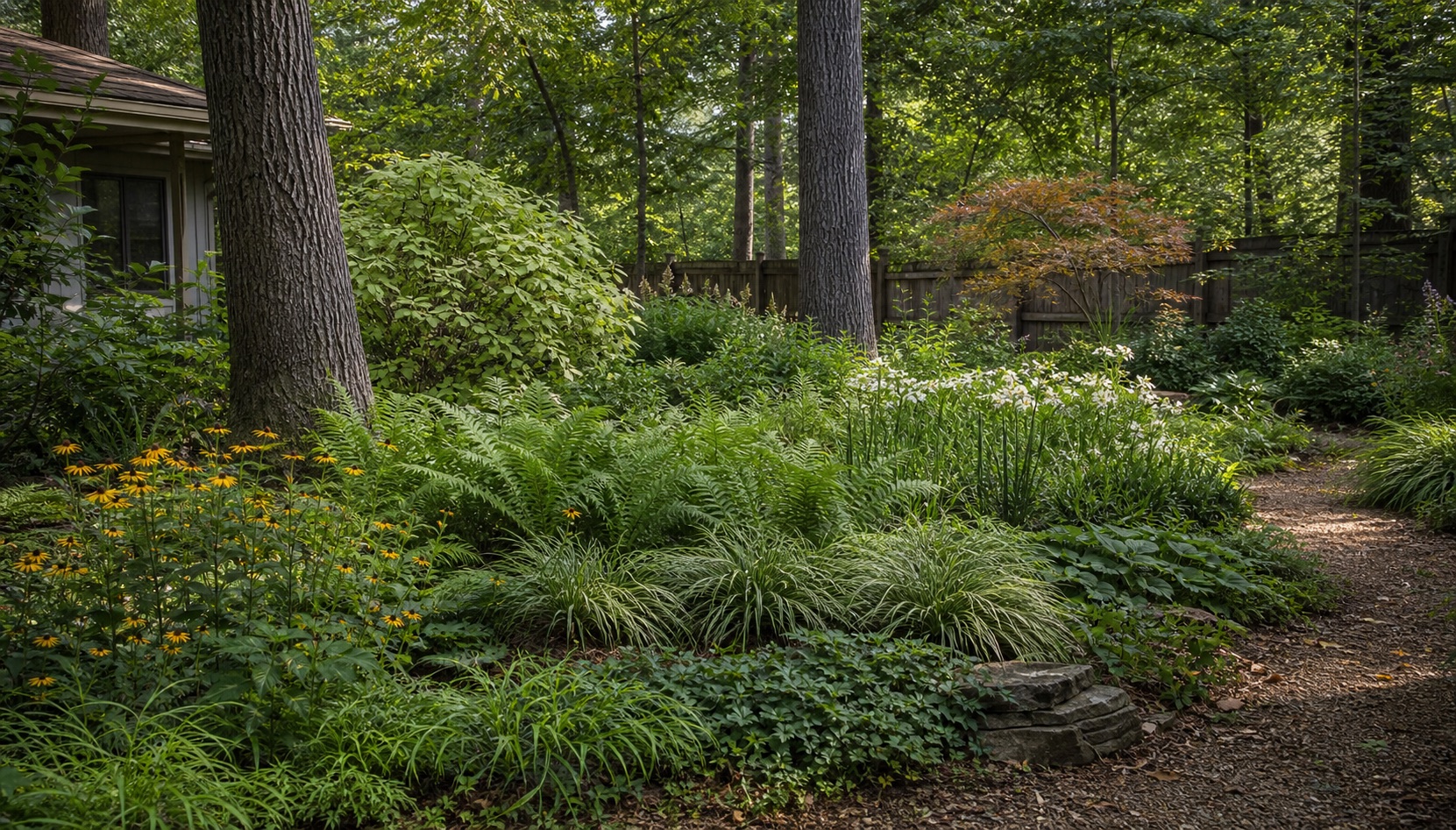
The short answer: the 2023 USDA Plant Hardiness Zone Map places Raleigh in Zone 8a, where the average annual extreme minimum winter temperature is 10°F to 15°F. Check your exact address in the USDA map, especially near the edges of the Triangle, and treat the zone as a cold-hardiness screen rather than a complete planting prescription.
What zone 8a actually means
The USDA Plant Hardiness Zone Map helps gardeners estimate which perennial plants are likely to survive winter. Each zone spans 10 degrees Fahrenheit and each “a” or “b” subdivision spans 5 degrees. Zone 8a corresponds to an average annual extreme minimum of 10°F to 15°F.
The key word is average. It is not the lowest temperature Raleigh can ever reach, a forecast for this winter or a guarantee that every plant labeled zone 8 will survive. A poorly sited plant can fail in a mild winter, while a well-established plant in a protected microclimate may tolerate a colder night than its label suggests.
Why some Raleigh gardeners remember zone 7b
The 2012 USDA map placed much of Raleigh and Wake County in zone 7b, with warmer pockets. The updated 2023 map uses weather data from 1991 through 2020 and places Raleigh in 8a. That does not mean every established plant list should be discarded. It means the statistical baseline changed.
For a long-lived garden, it can still be prudent to leave a margin for unusual cold—especially with exposed sites, young plants and species already near the edge of their range. A plant that is hardy to zone 7 or colder provides more winter margin than one listed only to zone 8.
What the zone does not tell you
| Condition | Why it matters in Raleigh | What to observe |
|---|---|---|
| Summer heat and humidity | A plant may survive winter yet decline during hot, humid nights. | Heat reflected by walls, pavement and west-facing exposures. |
| Sun and shade | Tree canopy and buildings create large differences within one property. | Hours of direct sun in spring and midsummer. |
| Clay and compaction | Piedmont subsoil and construction traffic can restrict air, water and roots. | How quickly water enters the soil and whether roots can penetrate it. |
| Drainage | A winter-hardy plant can still rot in a saturated bed. | Where water collects and how long the soil stays wet after rain. |
| Microclimate | Wind, low pockets and sheltered courtyards can shift local conditions. | Cold air drainage, exposure and heat held by masonry. |
A better way to choose plants for Raleigh
- Use zone 8a as the first filter. Favor perennials, shrubs and trees whose hardiness range includes 8a, with extra cold margin when practical.
- Read the site. Record light, moisture, drainage, slope, root competition and the available mature space.
- Check soil before guessing. NC State Extension recommends soil testing for pH and plant-available nutrients; texture and compaction need physical observation too.
- Match the species, not just the category. Two North Carolina natives can require opposite moisture conditions. “Native,” “shade plant” and “zone 8” are starting points, not final answers.
- Plan for establishment. Even a site-right plant needs careful installation, watering and weed control while roots establish.
The NC State Extension Gardener Plant Toolbox lets homeowners filter plants by hardiness zone, light, soil, moisture and region. That combination is much more useful than shopping by zone alone.
Planting design for Raleigh
Choose for the conditions. Compose for the whole garden.
Garden & Art designs layered, site-right planting for Raleigh properties—from woodland shade and clay soil to front-yard renovations and native-forward gardens.
Explore native garden design