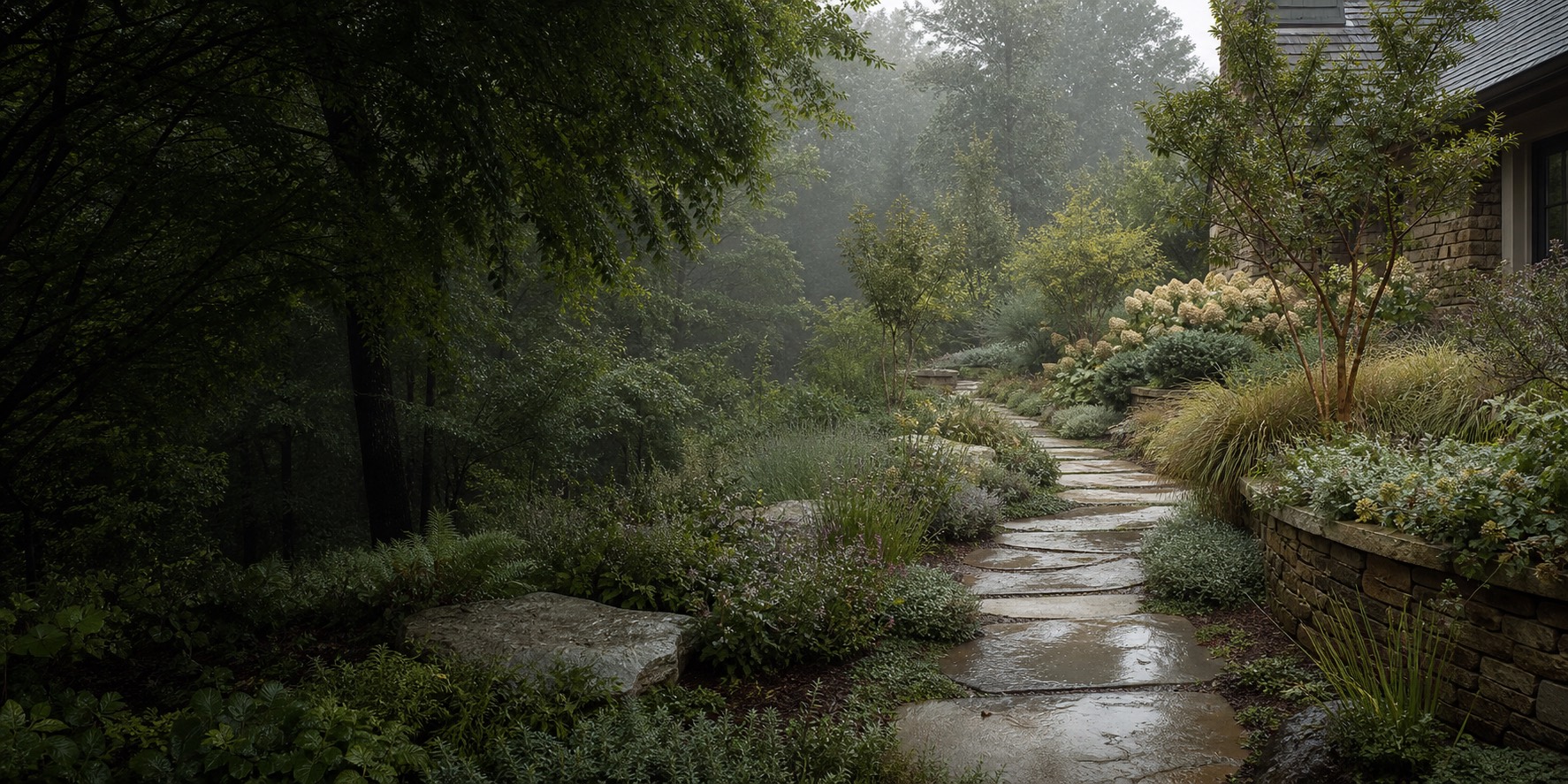
The short answer: Choose native shade plants for Raleigh by measuring light, observing soil moisture and accounting for tree-root competition and mature plant size. Native does not mean maintenance-free, and the best palette depends on the exact site.
Shade is not one condition. A Raleigh bed may receive gentle morning sun, bright filtered light all day or almost no direct light beneath evergreen branches. Soil can be dry from root competition on one side of a tree and wet near a downspout on the other. A useful native planting plan begins by separating those conditions.
Read the kind of shade {#shade}
Observe the site several times on a clear day and again as seasons change. Deciduous trees admit more light before leaf-out; buildings create sharper, more consistent shadows. Note whether the soil drains after rain and whether large roots occupy the planting zone.
The NC State Extension Plant Toolbox lets gardeners filter plants by light, moisture, size and other characteristics. Those fields are more useful than choosing from a generic “shade plants” list. Confirm the mature width and height as carefully as flower color.
Build a plant community, not a collection {#plants}
A durable composition usually combines a few structural plants with repeating groups of perennials, grasses, ferns or groundcovers. Repetition makes a shaded bed legible and reduces the patchwork effect created by buying one of everything.
The North Carolina Native Plant Society’s recommended species resources are a starting point for regionally appropriate choices. Availability and provenance vary, so verify each candidate against the actual site and buy from responsible nurseries.
Dry shade beneath established trees calls for a different palette from a shaded swale or woodland edge. Christmas fern, sedges and some woodland asters may suit certain dry-to-average sites; cardinal flower and other moisture-loving species belong where the soil stays reliably moist. These are examples to investigate, not a universal shopping list. Confirm each plant’s documented range, light and moisture needs before selecting it.
Also decide what the bed should do in every season. Evergreen foliage and persistent fern fronds can provide winter structure. Spring ephemerals may disappear by summer and need neighboring plants that fill the space without smothering them. Ground-layer plants should be placed densely enough to form a community over time, but not so tightly that mature crowns immediately compete.
Work carefully around mature trees {#roots}
Do not assume a shady area is empty soil. Mature tree roots often occupy the upper soil profile well beyond the canopy. Aggressive tilling, deep grade changes and piling soil or mulch against trunks can damage the trees that create the garden’s character.
Use small planting pockets where practical, protect major roots and keep the root flare visible. If the tree’s health or construction impacts are uncertain, consult a qualified arborist before changing grade or adding hardscape.
Plan for establishment and change {#care}
Native plants still need correct installation, water during establishment and room to reach mature size. “Native” describes ecological origin; it does not guarantee that a plant fits dry shade, browsing pressure or a homeowner’s maintenance expectations.
The NC State landscape-design handbook recommends inventory and site analysis before design. Apply that discipline, then review the bed after its first growing season. Thin, divide or relocate plants based on observed performance rather than forcing a failing choice.
Water the root zone according to rainfall and soil conditions during establishment rather than using a fixed promise. Keep mulch thin near small woodland plants and away from trunks. Watch for deer or rabbit browsing before investing in a large group of an untested species. A small trial planting can reveal whether the site’s shade, roots and wildlife pressure match the plan.
Choose the next step {#next}
Start with a small palette tied to dry shade, moist shade or filtered light, not all three at once. Map existing trees and drainage, then place plants at mature spacing. The guide to plants for Raleigh clay soil adds another useful filter.
For a coordinated plan that connects habitat, seasonal structure and the rest of the property, explore native garden design. Site observation remains the most important first step.
A site-specific Raleigh landscape
Turn general guidance into a plan for your property.
Garden & Art Landscapes brings horticultural knowledge, design thinking and construction experience to Triangle gardens.
Explore native garden designSources and further reading
- NC State Extension Plant Toolbox
- NC Native Plant Society recommended species
- NC State Extension landscape design handbook
Plant choices require site verification; this guide does not promise performance for every property.