Read the symptoms
We start with where water appears, how long it remains and what happens uphill. Photos taken during or after rain can help reveal patterns that are invisible on a dry visit.
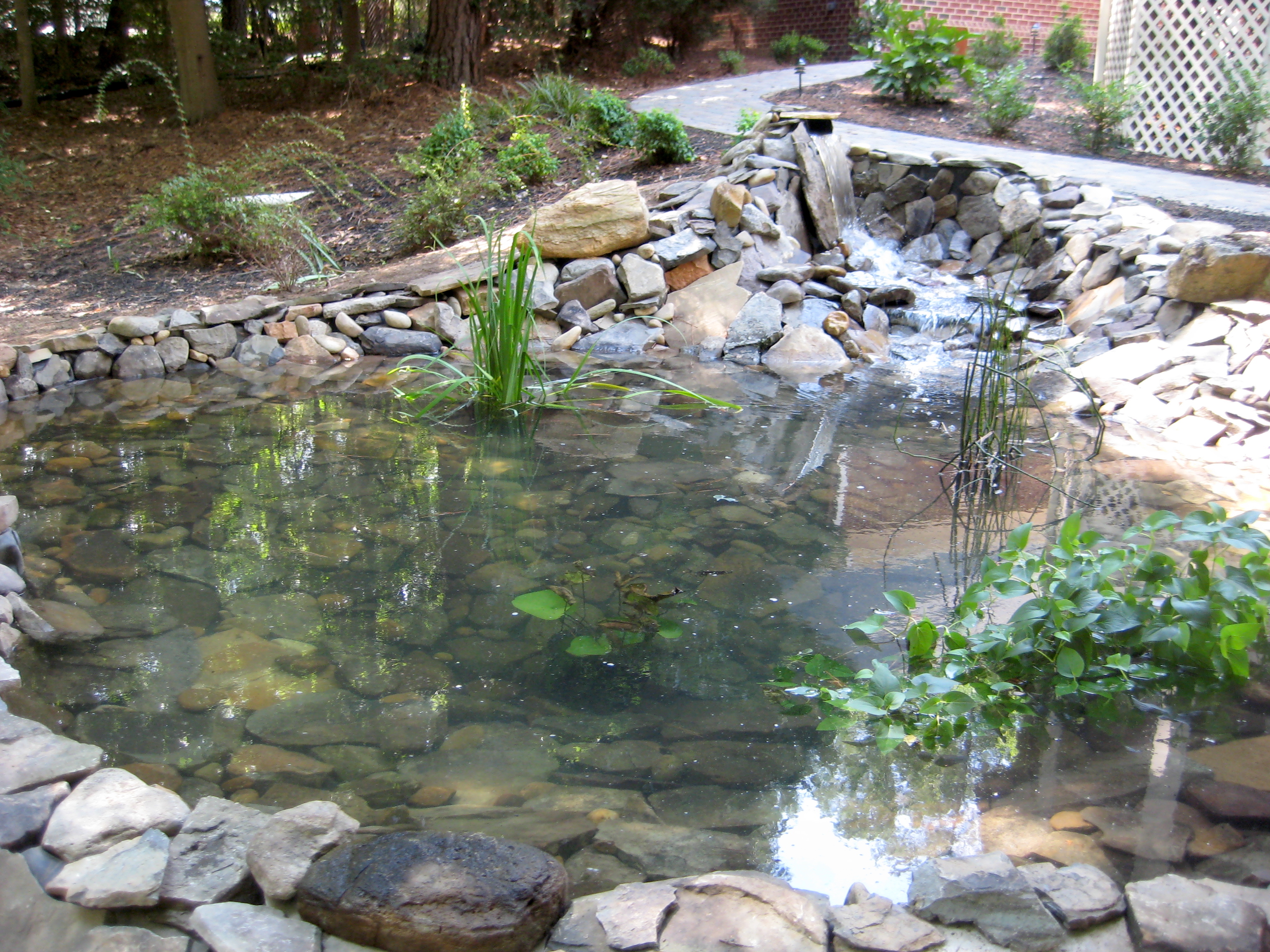
Yard drainage & rain gardens · Raleigh, NC
Garden & Art studies how water moves through a Raleigh property, then develops landscape drainage and rain-garden solutions that work with the site instead of treating every wet yard the same way.
Request a drainage assessmentDiagnose before digging
A useful drainage plan begins by understanding where the water comes from, how it travels and where it can safely go.
Raleigh’s clay-rich soils absorb water slowly, especially where construction, traffic or years of use have compacted them. Add roof runoff, low grades and intense summer storms, and a yard can stay soggy long after the clouds clear. The result may be unusable lawn, stressed plants, erosion, mud or water crossing a patio and path.
Garden & Art approaches these problems as part of the landscape. Norman Rabins combines horticultural knowledge with practical design and installation experience, looking at soil, grade, planting and built features together. That broader view matters because moving water away from one spot without understanding the full route can simply create a new problem somewhere else.
A site-specific process
We start with where water appears, how long it remains and what happens uphill. Photos taken during or after rain can help reveal patterns that are invisible on a dry visit.
Grade, roof runoff, compacted clay, neighboring flow, low spots and existing drains are considered together. The visible puddle is not always the source of the problem.
The right approach may slow, spread, redirect, store or absorb water. Recommendations are matched to the site instead of defaulting to one drainage product.
Grading, stone, conveyance and planting are coordinated so the solution functions during storms and still belongs in the landscape between them.
Function that belongs in the garden
A drainage feature is part of the property every day, not only when it rains. It should be designed with that reality in mind.
A shallow planted basin can collect runoff while creating a changing garden of grasses, perennials and shrubs. A stone-lined route can make occasional flow legible rather than looking like accidental erosion. Adjusting grade or a downspout may solve one area quietly, leaving the main garden free to do something else.
The solution must still have a safe overflow path and respect property boundaries, utilities and structures. We do not promise that a rain garden will absorb unlimited water, or that every low spot can be corrected through planting. When civil engineering, foundation work or municipal approval is the appropriate next step, that boundary should be clear.
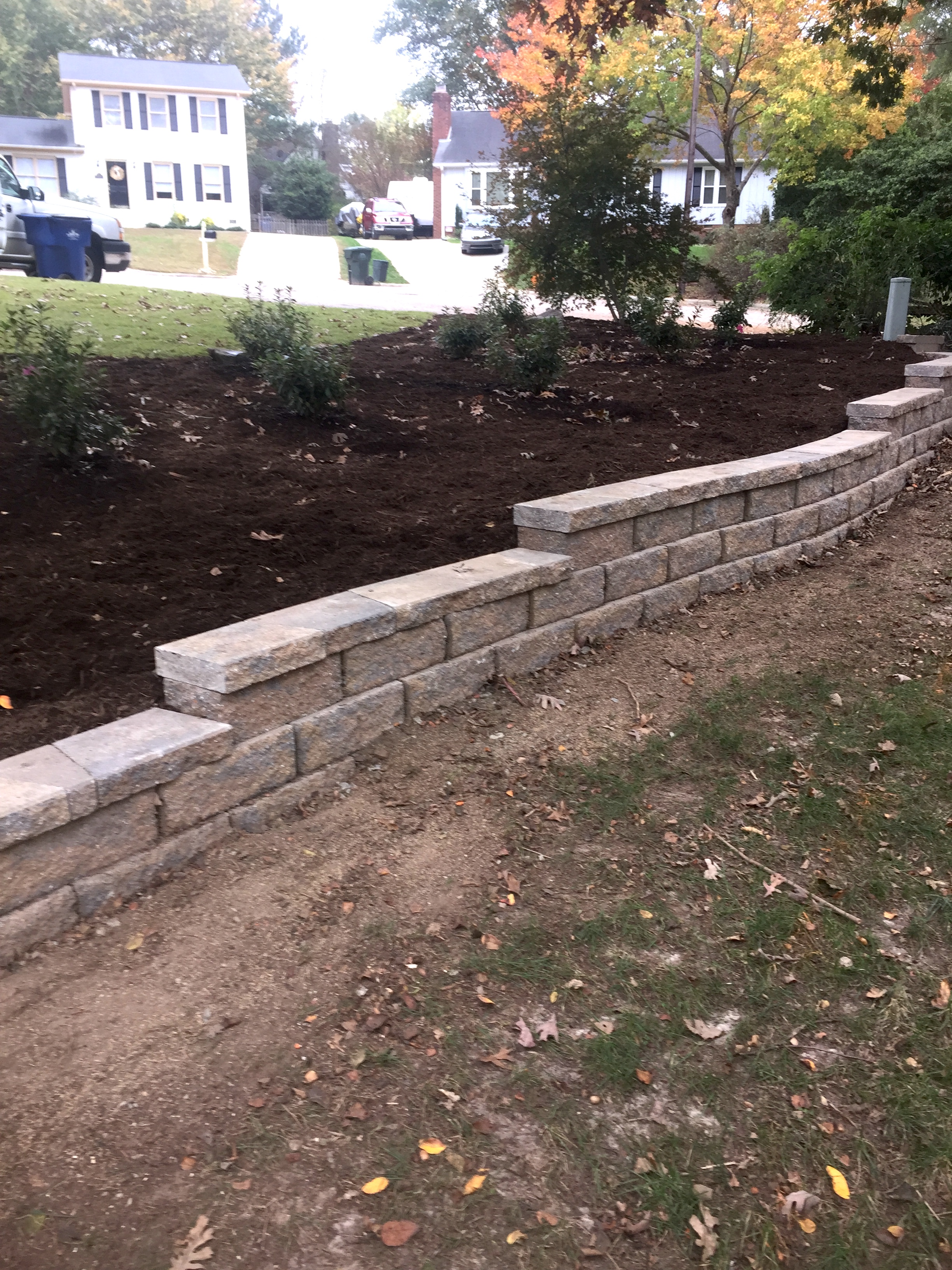
Scope, timing and investment
The cost and sequence depend on diagnosis. A small runoff correction and a property-wide grading problem are different projects, even if both appear first as a puddle.
A single downspout, broad surface flow and groundwater each behave differently. The contributing area and expected volume influence the response.
Slope, downstream conditions and a safe discharge or overflow route determine what is possible. Water should not be pushed onto a neighbor or structure.
Compacted clay, buried construction debris, tree roots and equipment access affect excavation, preparation and installation.
Stone, planting, irrigation changes and repairs to lawn, beds or hardscape are part of the complete scope rather than invisible extras.
Common questions
Common contributors include compacted clay soil, a low area with no outlet, concentrated roof runoff, changes in neighboring grade and undersized or blocked drainage paths. Several causes can overlap, which is why diagnosis should come before a proposed system.
No. A French drain is useful in certain subsurface-water situations, but it is not the answer to every wet yard. Surface grading, downspout routing, a swale, a rain garden or another approach may be more suitable. We recommend a method only after reading the site.
A rain garden is a shallow planted area designed to receive runoff and let it soak in over time. It is not a permanently wet pond. Its size, location, soil preparation, overflow route and plant community all matter to how well it works.
Yes. Stone channels, planted low areas and rain gardens can become intentional landscape features. Appearance never replaces function, but a horticulture-led design can address both instead of leaving a purely utilitarian strip through the yard.
Water near a foundation deserves careful attention, but foundation waterproofing, structural repair and engineered stormwater work may require other qualified specialists. Garden & Art defines the landscape scope and will not present planting or surface work as a cure for an issue outside that scope.
Evidence from a substantial rain is especially helpful. Take photos or short videos that show where water enters, how deep it becomes and how long it remains. A site visit can then connect that evidence to slope, soil and existing drainage features.